
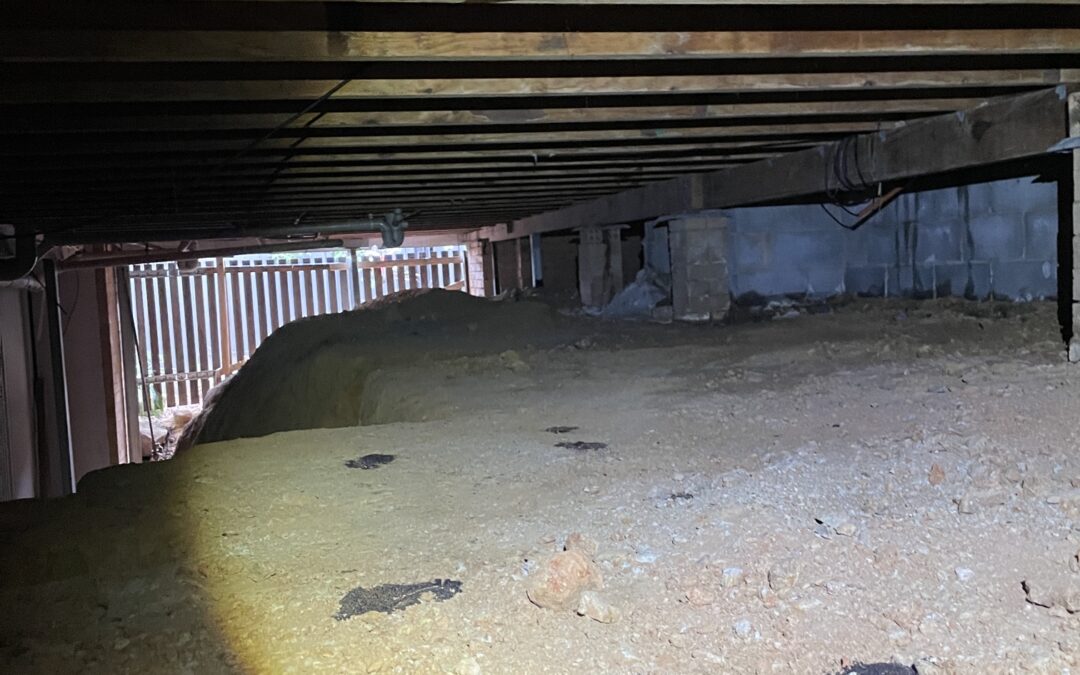
Drywood Termite Frass Led to a Hidden Infestation Beneath a Brisbane Home
During a recent termite inspection at a Brisbane home, our Director and Lead Termite Specialist, Hernan, discovered multiple piles of drywood termite frass (droppings) scattered throughout the property’s subfloor. While many homeowners mistake this material for sawdust or ant debris, it is often one of the earliest warning signs of a concealed drywood termite infestation.
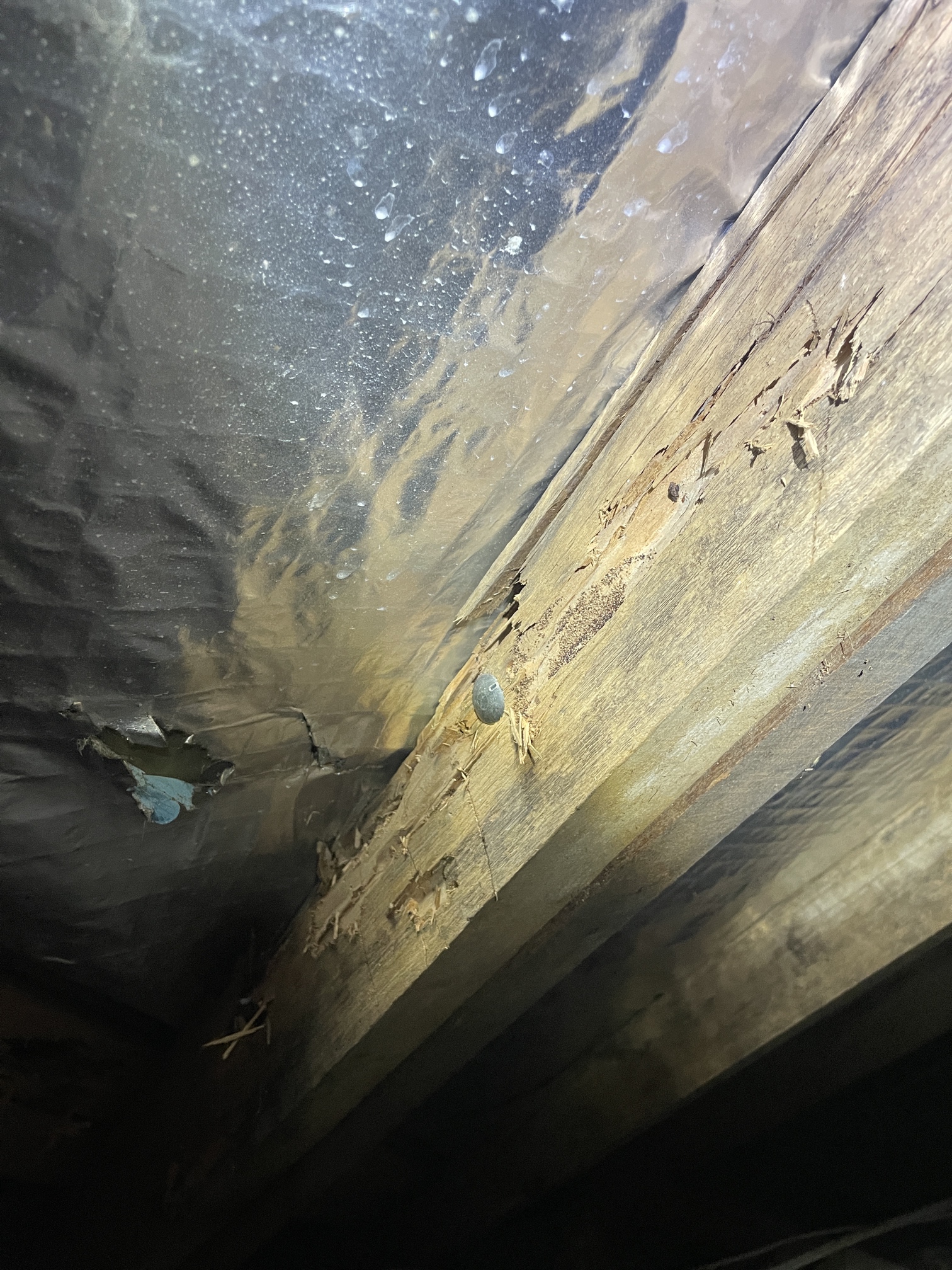
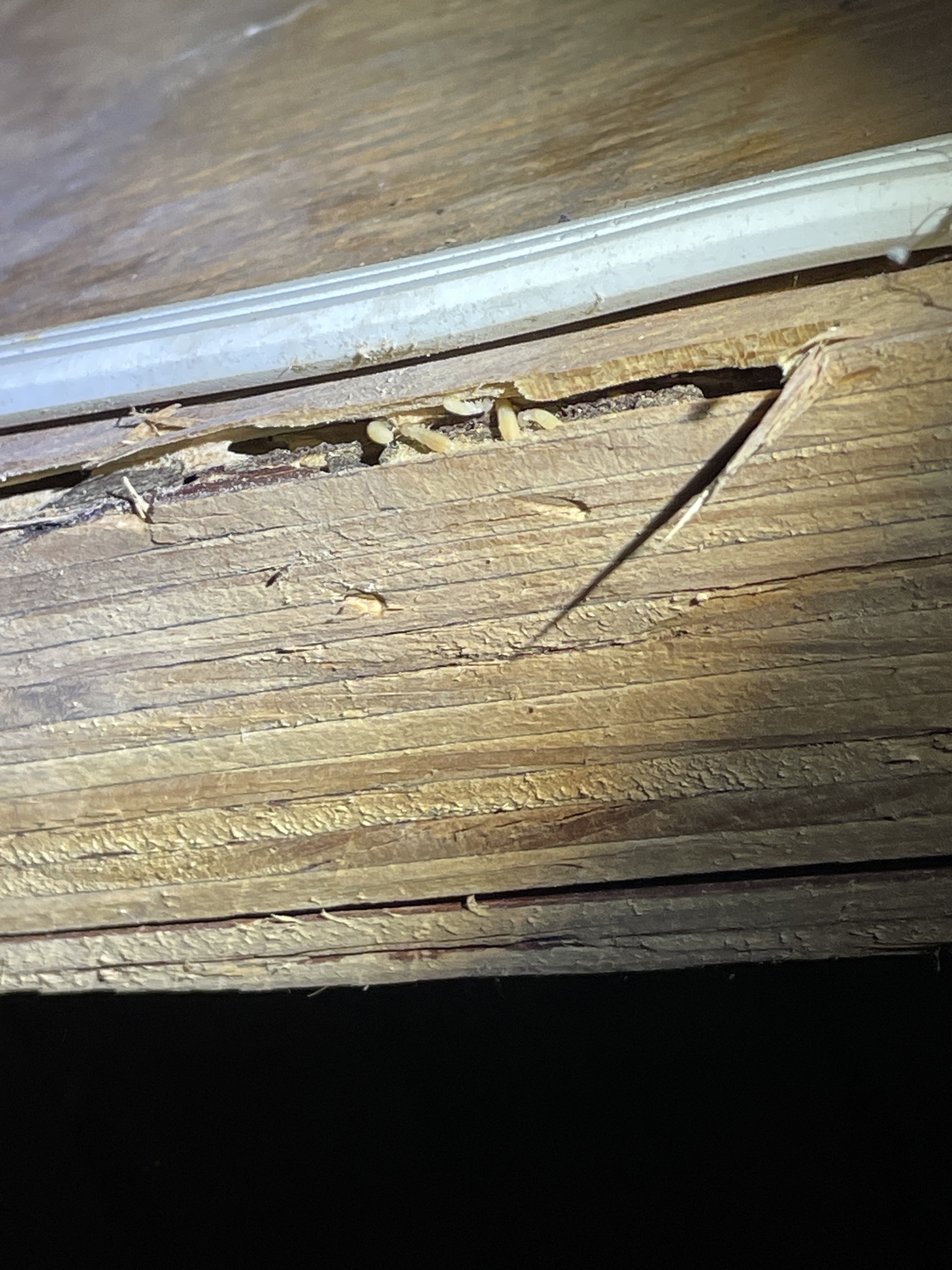
After tracing the source of the frass, we exposed the affected timber and discovered live drywood termites actively feeding inside the wood.
To ensure an accurate species identification, termite specimens were submitted to the Queensland Department of Primary Industries (DPI), which confirmed the termites as Cryptotermes brevis (West Indian Drywood Termites), an introduced invasive drywood termite species established in parts of Australia and considered one of the world most destructive Drywood Termite species.
What is Cryptotermes brevis?
Cryptotermes brevis, commonly known as the West Indian Drywood Termite, is one of the most significant drywood termite species found in Australia.
Unlike subterranean termites, drywood termites do not require contact with the soil. Instead, they live entirely inside dry timber, where they feed, reproduce and expand their galleries. This allows infestations to remain hidden for long periods before obvious signs become apparent.
Because they live inside the timber they consume, homeowners are often unaware of an infestation until damage becomes extensive.
The First Clue – Drywood Termite Frass
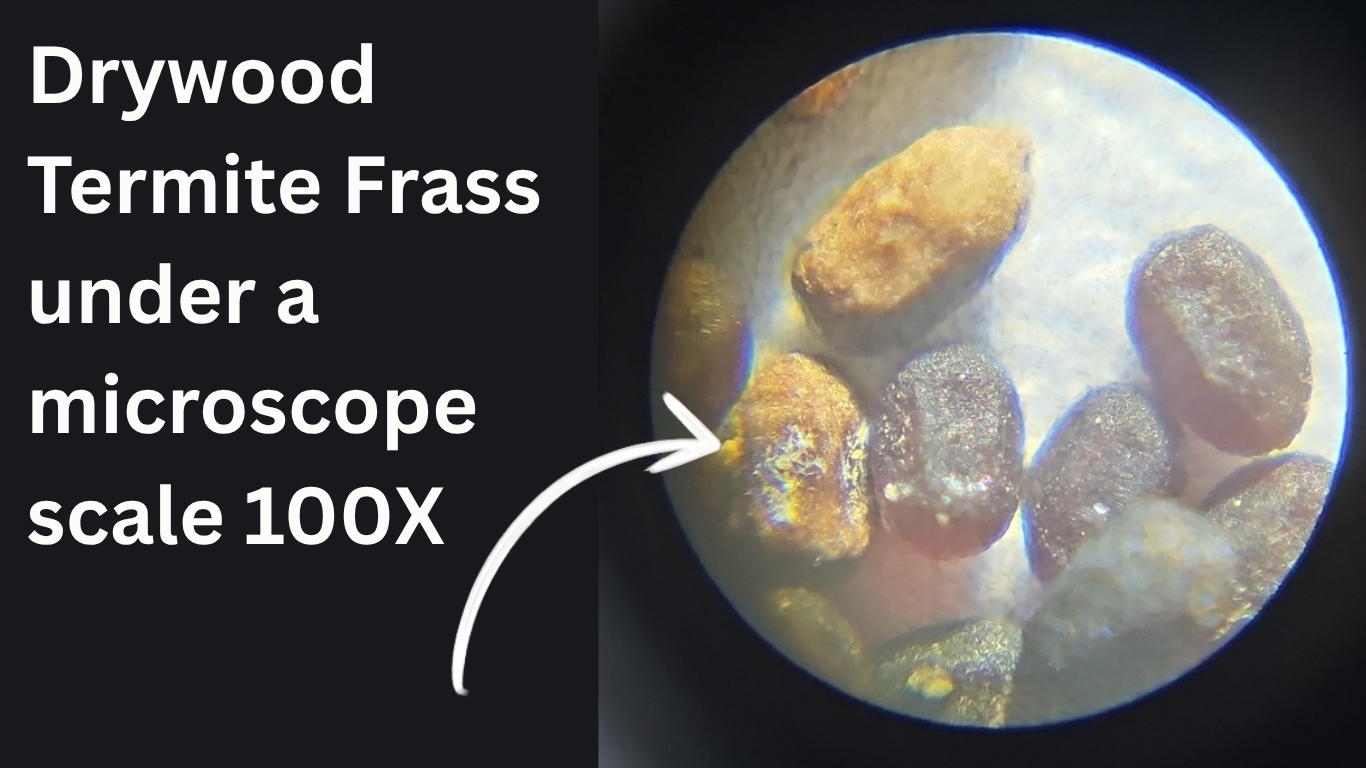
One of the clearest indicators of a drywood termite infestation is the presence of small, hard, pellet-shaped frass beneath infested timber. These tiny pellets are often mistaken for sawdust or freshly ground coffee due to their size and appearance. Frass can vary in colour from light cream and tan to dark brown or almost black, depending on the timber species being consumed and how long the pellets have been exposed to the environment. Unlike sawdust, the pellets are uniform in shape and are produced as drywood termites excavate and maintain their galleries within the timber.
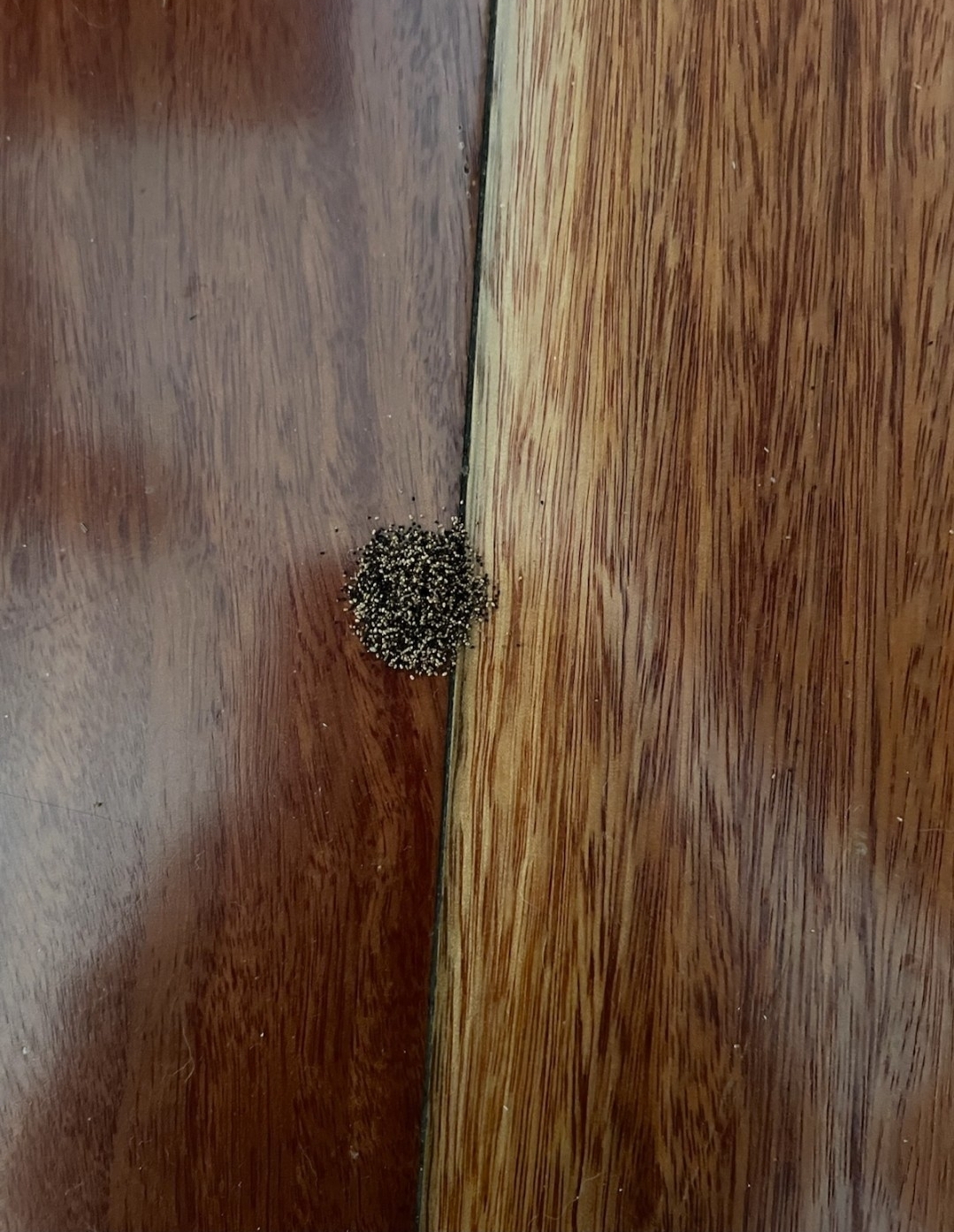
Drywood termites create tiny “kick-out” holes in the timber and periodically push these pellets out of their galleries to keep the nest clean.
Unlike sawdust produced by drilling or timber borers, drywood termite frass consists of uniform, six-sided pellets that accumulate in small piles beneath the point of infestation.
In this Brisbane property, multiple accumulations of frass throughout the subfloor immediately indicated that further investigation was required.
Live Drywood Termites Confirmed
Following the trail of frass, we located active galleries containing live Cryptotermes brevis feeding within the structural timber.
Finding live termites confirms that the infestation is active and requires appropriate management. Every infestation is different, so the most suitable treatment depends on factors such as the extent of activity, timber affected and accessibility.
Accurate species identification is critical because treatment recommendations for drywood termites differ from those used for subterranean termites.
Why Early Detection Matters
Drywood termites can remain hidden inside timber for years while slowly causing damage.
Professional inspections allow termite activity to be identified before significant structural damage occurs, potentially reducing repair costs and helping homeowners make informed decisions about termite management.
If you notice unexplained pellet-like material around your home, don’t assume it is simply sawdust. Having it inspected by a qualified termite specialist can determine whether drywood termites are present.
Watch the Inspection Video
In this inspection you’ll see:
- Multiple piles of drywood termite frass throughout the subfloor.
- Live Cryptotermes brevis feeding inside timber.
- How frass led us to the concealed infestation.
- Why laboratory confirmation is important when identifying termite species.
What Should You Do If Drywood Termites Are Found?
If drywood termites are confirmed in your home, the next step depends on the extent of the infestation, the location of the affected timber, and whether the activity appears to be localised or widespread.
Localised Spot Treatments
Where the infestation is confined to a small, accessible area, it may be possible to carry out targeted spot treatments using APVMA-approved drywood termite products. These treatments are designed to eliminate termites within the accessible galleries and can be an effective option where the infestation is isolated.
However, because drywood termites live entirely inside the timber, it can be difficult to determine the full extent of an infestation without opening wall cavities or removing affected timber. There is always the possibility that additional galleries remain concealed elsewhere within the structure.
Whole-Structure Fumigation
For extensive or widespread drywood termite infestations, whole-structure fumigation is generally regarded as the most comprehensive treatment option. Fumigation allows the fumigant to penetrate throughout the structure, targeting drywood termite colonies wherever they are concealed.
While highly effective, fumigation is a specialised treatment that requires occupants to vacate the property for a period of time and is generally a significantly higher-cost option than localised treatments.
Timber Replacement
Where termites have caused significant damage, replacement of affected timber may also be necessary. Replacing damaged timber not only restores the structural integrity of the building but also removes heavily infested sections that may no longer be suitable for repair.
Every Property Is Different
There is no one-size-fits-all solution for drywood termites. The most appropriate management strategy should always be based on a professional inspection, accurate species identification, the extent of the infestation, the construction of the building and the homeowner’s objectives and budget.
At Concept Termite & Pest Management, we’ll explain the advantages and limitations of each option and provide practical recommendations so you can make an informed decision about protecting your home.
Concerned About Drywood Termites?
If you’ve noticed unusual pellet-like material, damaged timber, or signs of termite activity, don’t wait until the damage becomes extensive.
At Concept Termite & Pest Management, we provide professional termite inspections, timber pest inspections and tailored termite management solutions throughout Brisbane and South East Queensland.
Our inspections utilise specialised equipment, including thermal imaging cameras, moisture meters, borescopes and other professional inspection tools to help detect concealed termite activity.
Book your termite inspection today and protect your home before termites cause further damage.
For more information please visit the following: