
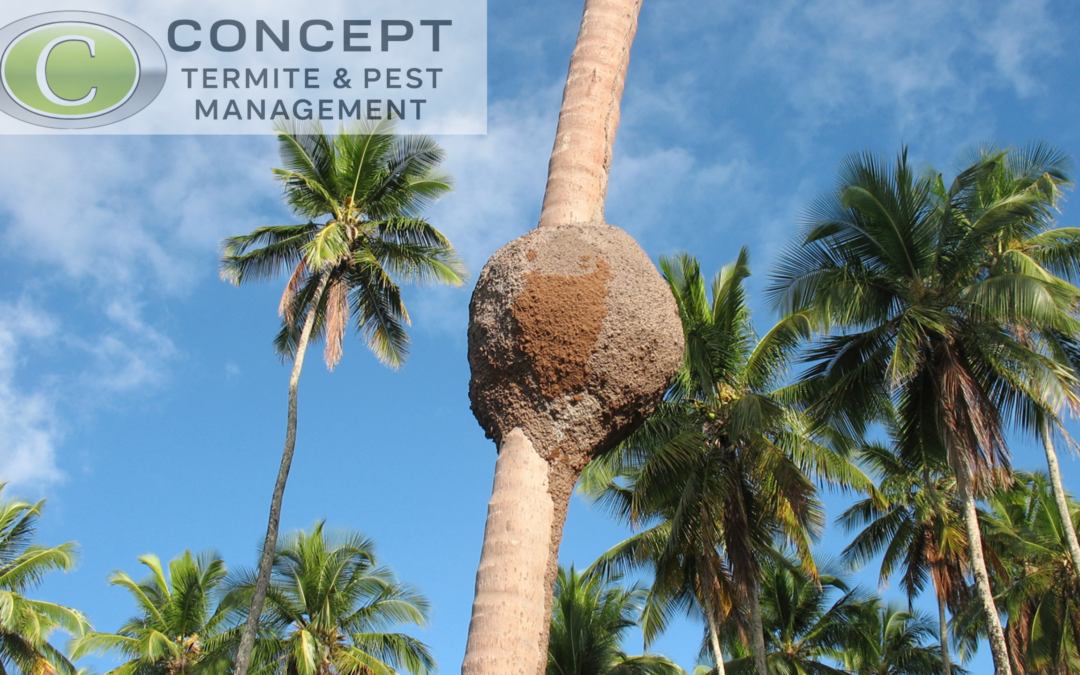
A recent termite inspection in Pimpama uncovered active termite mud leads running up a tree and into an arboreal termite nest.
Termite activity isn’t always found inside a house or underneath the building.
During a recent termite inspection in Pimpama on the Gold Coast, we came across something that immediately required a closer look — active termite mud leads running up the trunk of a tree towards an arboreal termite nest.
This was a good example of why the areas surrounding a property can be just as important as the building itself when investigating termite activity.
Following the termite activity
The visible mud leads provided an important clue.
Rather than simply looking at the tree from ground level, we followed the evidence of termite activity up the trunk towards the nest.
The mud leads were active, indicating that termites were using this concealed pathway.
The discovery of an arboreal nest does not, by itself, establish that termites have entered a nearby house. However, when active termite workings are found around a property, the surrounding structures and building should be properly assessed.
What is an arboreal termite nest?
An arboreal termite nest is a termite nest located above ground, commonly associated with a tree.
Some termite species are capable of constructing nests above ground in trees. The nest can form part of a wider termite colony and may be connected with termite activity elsewhere in or around the tree.
For homeowners, the important point isn’t simply that a nest exists.
It’s the evidence of active termite movement and the location of that activity in relation to the home and other structures.
Why were the mud leads significant?
Termite mud leads or shelter tubes provide termites with a protected route between areas of their colony and their feeding or foraging areas.
In this case, the mud leads were visible running up the tree towards the arboreal nest.
That gave us something concrete to investigate rather than relying on assumptions about where the termites might be.
Termites in trees don’t automatically mean termites are in your house
This is an important distinction.
Finding termites or a termite nest in a tree does not automatically mean the house is infested.
However, active termite activity around a property shouldn’t simply be ignored.
During an inspection, we consider the relationship between the termite activity and nearby structures, including:
- The house perimeter
- Trees and stumps
- Garden beds and landscaping
- Timber structures
- Retaining walls
- Areas of moisture
- Timber in contact with soil
- Other potential concealed entry points
A thorough inspection can help determine whether there is evidence of termite activity affecting the building or whether the activity appears to be associated with another area of the property.
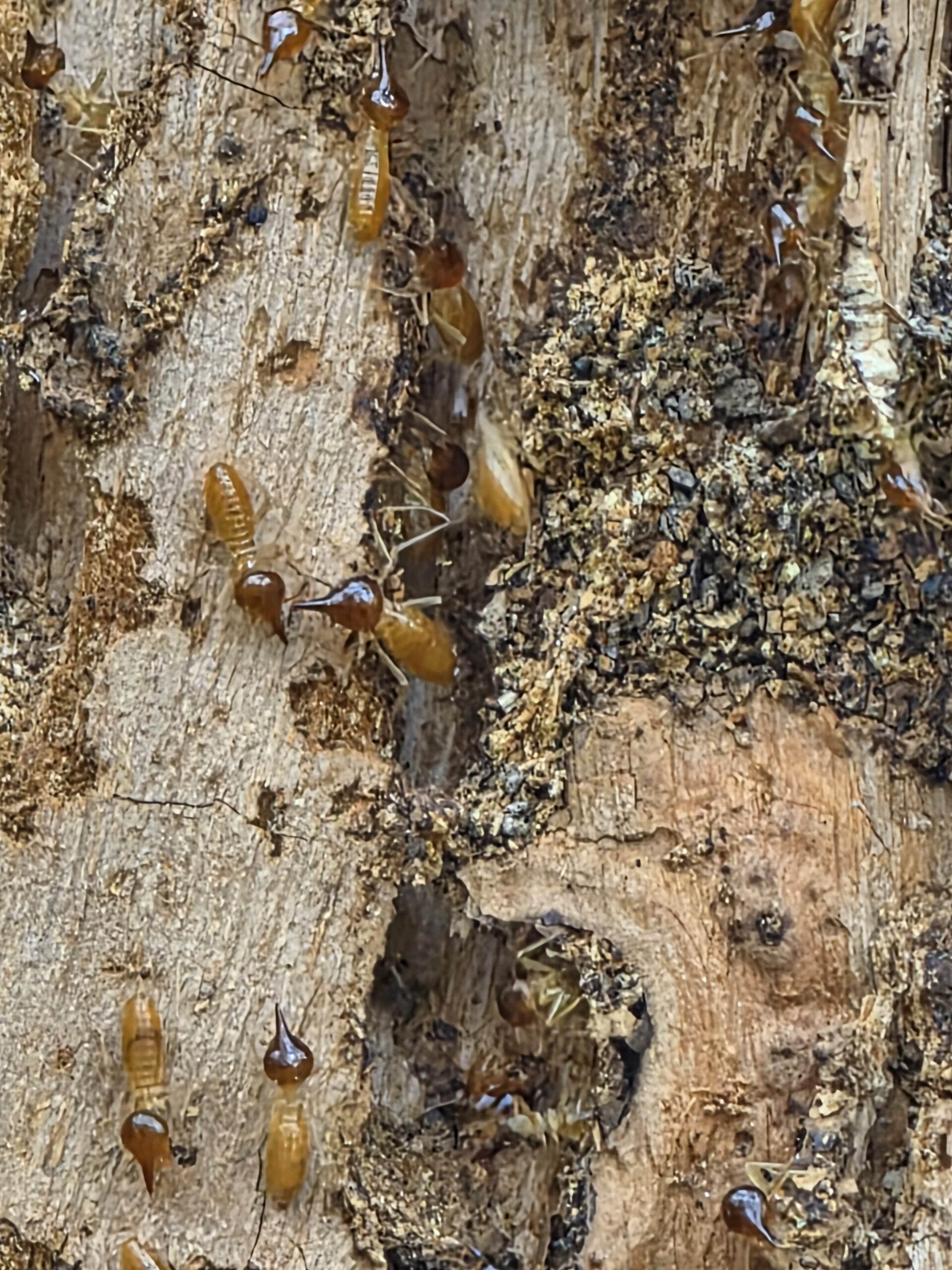
A reminder to look beyond the obvious
This Pimpama inspection was a great example of why termite investigations require more than simply looking for visible damage inside a home.
The clue was on the tree.
Active mud leads running up the trunk led us to an arboreal termite nest that may otherwise have gone unnoticed.
For homeowners, regularly checking trees, landscaping and other areas around the property can help identify unusual termite activity early.
If you discover mud leads on a tree, termite workings or a suspected termite nest, don’t simply remove the visible mud and assume the problem has gone away.
Have the activity properly assessed.
Termite inspections in Pimpama and the Gold Coast
Concept Termite & Pest Management provides termite inspections and termite management services across Pimpama, the Gold Coast and South East Queensland.
Our inspections assess accessible areas of the building and surrounding property for evidence of termite activity, termite damage and conditions that may contribute to termite risk.
Sometimes finding termites starts with looking somewhere you weren’t expecting them.