Spring is here in Brisbane, and for timber pest professionals, this is an important time of year.
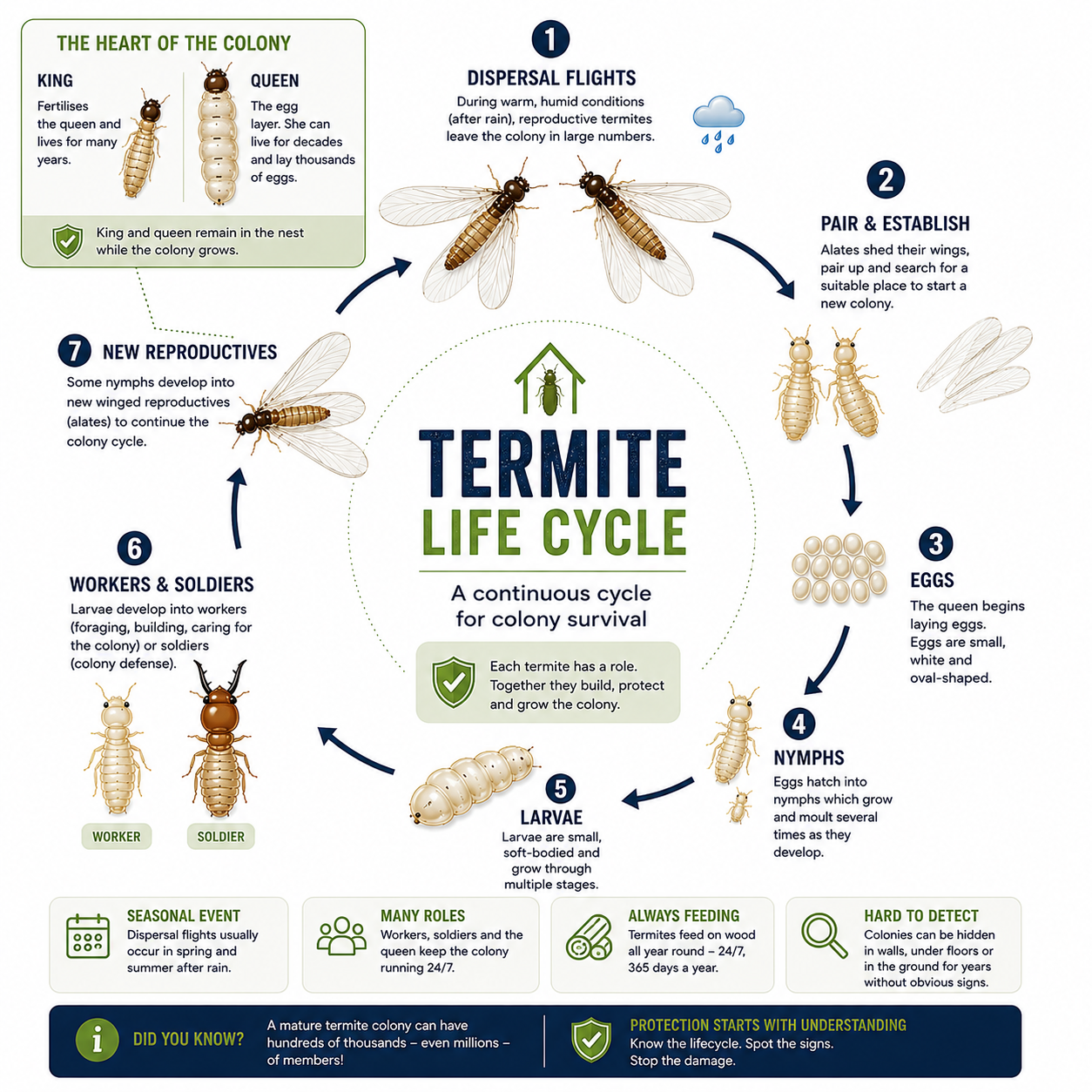
Termite colonies are continuing to develop their reproductive forms, and as conditions become favourable, homeowners may soon begin noticing winged termites, also known as alates, and discarded wings around their properties.
Recently, we came across something particularly interesting: a developing reproductive Schedorhinotermes sp.
Not quite an alate yet
At first glance, it can look like a small winged termite.
However, this individual hasn’t completed its development into a fully mature alate.
It was still within the colony and showed developing wings and developed eyes, providing a fascinating look at the stage before the fully winged reproductive emerges.
This distinction is important.
A mature alate is the winged reproductive form capable of leaving the colony during a dispersal flight. Developing reproductives occur inside the colony before reaching this stage.
Why does this matter in spring?
Termite dispersal is one of the most visible signs of termite activity.
Queens, kings and winged reproductives are involved in the reproductive cycle, and dispersal allows termites to leave established colonies and potentially establish new colonies elsewhere.
For homeowners, the most obvious signs can include:
Flying termites around lights and windows
Discarded termite wings
Termites emerging around timber
Mud shelter tubes or galleries
Previously unnoticed termite damage
However, finding a flying termite does not automatically prove that a colony is inside your home. Correct identification and an inspection of the surrounding property are important.
Schedorhinotermes in Queensland
Schedorhinotermes is a widespread subterranean termite group in Queensland. It includes species encountered across South East Queensland, and the genus is recognised as an important timber-damaging termite group.
These termites generally live within protected galleries and rely on moisture, making their activity difficult to detect without a thorough inspection.
That is why termite inspections can involve considerably more than simply looking for visible termites.
What should Brisbane homeowners do?
If you notice flying termites or discarded wings around your property this spring, don’t panic — but don’t simply sweep them away and forget about them either.
Take a photograph if possible and note exactly where they were found.
An experienced termite inspector can assess the property for evidence of termite activity and determine whether further investigation is warranted.
At Concept Termite & Pest Management, termite inspections may involve visual inspection together with specialised inspection equipment where appropriate.
The termite season is beginning
We may have only just entered spring, but the termite colonies are already preparing.
The individual in our video isn’t a fully developed alate yet.
But it could be a sign of what’s coming next.
As the weather warms, we’ll be watching closely for the first major termite dispersal flights across Brisbane and South East Queensland.
Have you seen flying termites around your home yet?
Understanding the Termite Life Cycle