
Termite Construction Site
Ever wondered what termites actually look like when they’re building their home?
When most people think about termites, they imagine something hidden — termites inside a wall, underneath a floor or quietly eating away at timber.
But during termite work in Capalaba, Brisbane, we came across something very different.
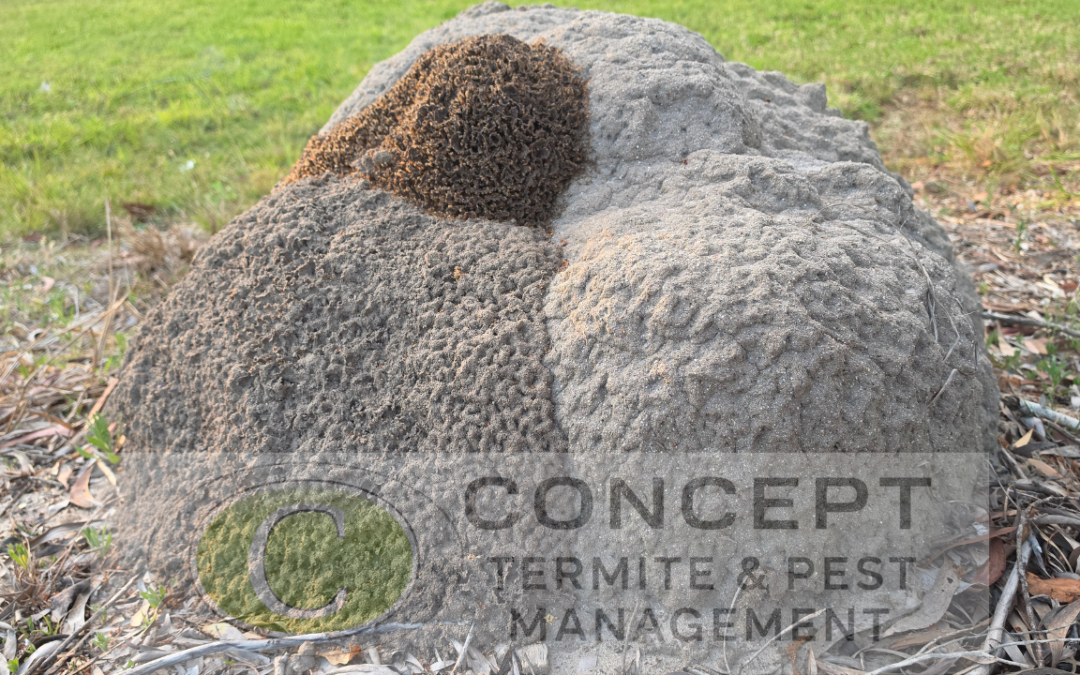
We found a large active termite mound with termites out in the open, actively building and maintaining their nest.
What made this sight particularly interesting was just how much termite activity was visible.
Large numbers of worker termites were actively moving around the mound and carrying out construction and maintenance, while numerous soldier termites were positioned among them, guarding and protecting the workers.
It’s not something most people ever get the opportunity to see.
Termites are generally highly secretive insects, particularly when they are foraging around buildings. Seeing large numbers of them exposed and actively working on the outside of their nest is relatively uncommon and gives a fascinating glimpse into how a colony operates.
And while a termite mound can be impressive to look at, it also highlights an important message for Brisbane homeowners:
The termites you can see are easy to notice. It’s the termites you can’t see that can cause the biggest problems.
🐜 Termites caught building their home
The mound was active, with termites working around the structure and continuing to build and maintain their nest.
The termites observed were consistent with Nasutitermes spp., a group of mound-building termites found in Australia.
Watching them work was a great example of just how organised a termite colony can be.
The workers were actively involved in construction and maintenance, while soldiers were present in significant numbers around the workers.
This division of roles is one of the fascinating characteristics of termite colonies.
Worker termites undertake much of the colony’s construction, maintenance and foraging activities, while soldier termites are specialised for colony defence.
In this case, the soldiers appeared to be providing protection while the workers continued their activity around the exposed section of the mound.
For a pest management professional, seeing this behaviour in the field is particularly interesting because homeowners would normally never see this level of termite activity.
Why is it unusual to see termites out in the open?
Termites are generally associated with concealed activity.
When termites are foraging for food, they often avoid exposure to the environment and predators by travelling through soil, timber, shelter tubes and other protected pathways.
That’s one reason termite infestations can be so difficult for homeowners to detect.
The right environmental conditions matter
Another fascinating part of this observation was the environmental conditions.
Termites are highly sensitive to their surroundings, particularly moisture and humidity.
Their bodies can lose moisture relatively quickly when exposed to dry conditions, which is one reason termites generally remain concealed within protected, humid environments.
When conditions around the nest are sufficiently favourable — including appropriate humidity and moisture — termites can be more readily observed outside the protected areas of the colony.
This helps explain why seeing large numbers of termites exposed in the open is not something you commonly encounter during everyday life.
On this occasion, the conditions appeared favourable for the termites to be active around the exposed section of the mound, allowing us to observe something that would normally remain hidden.
We could see large numbers of worker termites actively constructing and maintaining the mound, while numerous soldier termites remained among them, providing colony defence.
It was almost like watching a miniature construction site in progress.
And that is what made this observation particularly interesting: we weren’t simply looking at an old termite mound — we were seeing an active colony at work.
For homeowners, however, there’s an important connection.
The same environmental factors that allow termites to thrive around a property can also contribute to termite risk around buildings.
Moisture, poor drainage, leaking plumbing, garden irrigation and other conducive conditions can create areas that are attractive to termites.
That’s another reason a professional termite inspection should look beyond simply searching for visible termites.
Sometimes the important clues are the environmental conditions that make a property more favourable to termite activity.
What are Nasutitermes?
Nasutitermes is a genus of termites belonging to the family Termitidae.
One of their most distinctive features is the specialised nasus found on soldier termites.
The nasus is a pointed projection on the front of the soldier’s head and is associated with their defensive behaviour.
Nasutitermes are also well known for their above-ground nests and mounds.
There are multiple Nasutitermes species found in Australia, so identifying a termite to an exact species level from photographs or video alone isn’t always appropriate.
For this reason, we refer to the termites observed in this case as Nasutitermes spp.

Why do termites build mounds?
Termite mounds are much more than piles of dirt.
They form part of the colony’s nesting system and provide a protected environment for the termites living inside.
Worker termites continually construct, repair and modify the structure as the colony develops.
The size, shape and location of a termite mound can vary depending on the termite species, environment and age of the colony.
Some termite colonies remain largely underground or within timber, while other species construct highly visible above-ground nests.
This is one of the reasons termites are so fascinating from an ecological perspective.
They are capable of transforming relatively simple materials such as soil into complex structures that support an entire colony.
Does finding a termite mound mean your house has termites?
Not necessarily.
Finding an active termite mound on a property does not automatically mean that termites have entered the house.
The mound may simply be an established colony living in the surrounding environment.
However, it is still something homeowners should take seriously.
Termites forage away from their nesting areas looking for suitable food sources.
And when that food source happens to be timber associated with a building, that’s when a potential termite problem begins.
The important point is that you cannot determine whether a house has termites simply by looking at the mound.
The building itself needs to be assessed.
The termites damaging your home may be completely hidden
This is where the discovery becomes particularly relevant to homeowners.
The termites in this mound were obvious because they were working in the open.
Termite activity inside a building can be completely different.
Termites can remain concealed while travelling through areas such as:
- soil around foundations
- wall cavities
- subfloor areas
- construction joints
- service penetrations
- concealed cracks and entry points
- areas affected by moisture
- garden beds and landscaping
- timber structures around the property
This means a homeowner can have termite activity without seeing a single live termite.
By the time obvious damage becomes visible, the colony may have already been active for some time.
What signs should homeowners look for?
There are a number of signs that can indicate termite activity.
Mud or shelter tubes
Termites may construct concealed pathways between the soil, colony and food source.
Damaged timber
Termite damage can weaken timber internally while the outside surface initially appears relatively normal.
Hollow-sounding timber
Some termite-damaged timber can produce a different sound when tapped.
Bubbling or distorted surfaces
Changes to paint, skirting boards, flooring or other finishes can sometimes be associated with underlying timber damage or moisture.
Discarded wings
After termite swarmers emerge, discarded wings can sometimes be found around windows, doors and other areas.
Termites around gardens and landscaping
Termites can be found in tree stumps, retaining timbers, garden structures and other timber around a property.
But there is one important thing to remember:
No visible signs does not mean no termites.
This is why termite inspections are so important
A professional termite inspection is not simply a quick walk around the outside of a house looking for a mound.
The purpose is to investigate accessible areas of the property for evidence of:
- active termite activity
- previous termite activity
- timber damage
- potential termite entry points
- moisture and conducive conditions
- areas where termite risk may be increased
At Concept Termite & Pest Management, we use specialist termite inspection equipment and techniques, which can include:
🔎 Termatrac T3i
🌡️ Thermal imaging cameras
💧 Moisture meters
📷 Borescopes
Along with detailed visual inspection of accessible areas, including subfloor spaces where appropriate.
The inspection approach depends on the property’s construction, accessibility and individual circumstances.
Found a termite mound? Don’t panic — investigate.
If you discover an active termite mound in your yard, there’s no need to immediately assume your home is infested.
But it shouldn’t simply be ignored.
A termite mound is a good reason to consider the termite risk around your property and arrange a professional assessment.
An inspection can help establish whether there is evidence of termite activity affecting the building and whether there are conditions around the property that could increase termite risk.
The earlier a potential termite problem is identified, the more information you have available when deciding what, if anything, needs to be done.
Termites are fascinating — until they’re in your house
From an ecological perspective, watching termites work together to construct and maintain a mound is fascinating.
Seeing large numbers of workers exposed and actively building while soldiers guard them provides an unusual glimpse into the organisation of a termite colony.
But the same biological behaviours that make termites fascinating in the environment are also what make termite management around buildings so important.
A termite colony doesn’t need to be visible to cause damage.
In fact, the most concerning termite activity is often the activity you can’t see.
Don’t wait until you find the damage
One of the biggest mistakes homeowners can make is waiting for an obvious sign before thinking about termites.
You don’t have to find a termite mound.
You don’t have to see a live termite.
And you don’t have to find damaged timber.
A professional termite inspection can help identify signs of activity before they become obvious to the homeowner.
If you live in Brisbane or South East Queensland and can’t remember the last time your property was professionally inspected, it’s worth considering an inspection — particularly if you have mature landscaping, timber structures, garden beds, moisture issues or other conditions that may increase termite risk.
Termites building a mound are fascinating. Termites building a nest inside your house are a different story.
This Capalaba mound gave us a fascinating opportunity to see termites doing what they naturally do — building and maintaining their home in the open, with workers constructing the nest while soldiers remained nearby to protect them.
But for homeowners, the bigger message is simple:
You don’t need to see termites to have a termite problem.
Regular professional termite inspections can help you understand what’s happening around your property and identify potential issues that may otherwise remain hidden.
Professional termite inspections in Capalaba and Brisbane
Concept Termite & Pest Management specialises in termite inspections, termite management and timber pest inspections throughout Brisbane and South East Queensland.
We service Capalaba, Redlands, Brisbane Bayside, Cleveland, Wynnum, Mount Gravatt and surrounding areas.
Whether you’ve discovered a termite mound, found termites in your garden, noticed possible timber damage or simply haven’t had your property inspected recently, we’re here to help investigate the termite risk around your home.
📞 Contact Concept Termite & Pest Management to arrange a professional termite inspection.
Concept Termite & Pest Management
Termite Specialists | Timber Pest Inspections | Pest Management
📍 Capalaba | Brisbane Bayside | Redlands | Brisbane | South East Queensland